

Shervin Rasoulzadeh , Raman Suliman, Arvin Rasoulzadeh, Iva Kovacic, Michael Wimmer
Predicting Deformation Fields on 3D Stroke Clouds
In Spanisch Computer Graphics Conference Short Papers. July 2026.
[ paper]
Information
- Publication Type: Conference Paper
- Workgroup(s)/Project(s):
- Date: July 2026
- ISBN: 978-3-03868-301-8
- Series: Eurographics
- Open Access: yes
- Lecturer: Shervin Rasoulzadeh
- Event: Spanish Conference on Computer Graphics (CEIG 26)
- DOI: 10.2312/ceig.20261012
- Booktitle: Spanisch Computer Graphics Conference Short Papers
- Article Number: ceig.20261012
- Pages: 4
- Conference date: 1. June 2026 – 3. June 2026
- Keywords: Computing methodologies → Computer graphics, Geometric modeling, Machine learning, Modeling and simulation
Abstract
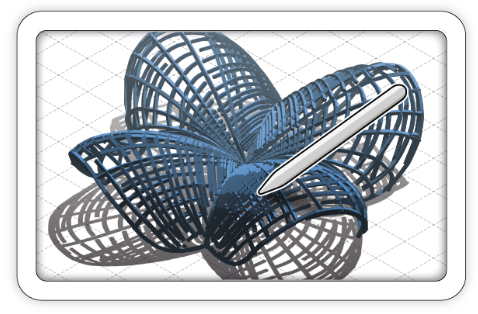
Deformation analysis is typically performed only after geometric modeling in design workflows, depriving designers of this physical insight during the early sketching phase, when the design has the highest optimization potential. To bridge this gap, we propose a physics-informed neural model that takes as input a 3D sketch stroke cloud and user-specified boundary conditions, and directly predicts the induced 3D deformation field on the stroke cloud without requiring reconstruction-and-simulation. To represent unstructured 3D sketches and user-annotated boundary conditions in a form suitable for learning, we use fVDB to encode stroke clouds into sparse voxel grids and leverage its differentiable splatting and sampling operators for bidirectional point–voxel mappings. Trained on our synthetic dataset of architectural thin-shell sketch–deformation pairs, our dual-head model predicts per-point displacement magnitudes and unit-length vectors, and is optimized using physics-informed loss terms inspired by stretching and bending as the two modes of deformation.Additional Files and Images

Weblinks
BibTeX
@inproceedings{RASOULZADEH-2026-PREDICTING,
  title =      "Predicting Deformation Fields on 3D Stroke Clouds",
  author =     "Shervin Rasoulzadeh and Raman Suliman and Arvin Rasoulzadeh
               and Iva Kovacic and Michael Wimmer",
  year =       "2026",
  abstract =   "Deformation analysis is typically performed only after
               geometric modeling in design workflows, depriving designers
               of this physical insight during the early sketching phase,
               when the design has the highest optimization potential. To
               bridge this gap, we propose a physics-informed neural model
               that takes as input a 3D sketch stroke cloud and
               user-specified boundary conditions, and directly predicts
               the induced 3D deformation field on the stroke cloud without
               requiring reconstruction-and-simulation. To represent
               unstructured 3D sketches and user-annotated boundary
               conditions in a form suitable for learning, we use fVDB to
               encode stroke clouds into sparse voxel grids and leverage
               its differentiable splatting and sampling operators for
               bidirectional point–voxel mappings. Trained on our
               synthetic dataset of architectural thin-shell
               sketch–deformation pairs, our dual-head model predicts
               per-point displacement magnitudes and unit-length vectors,
               and is optimized using physics-informed loss terms inspired
               by stretching and bending as the two modes of deformation.",
  month =      jul,
  isbn =       "978-3-03868-301-8",
  series =     "Eurographics",
  event =      "Spanish Conference on Computer Graphics (CEIG 26)",
  doi =        "10.2312/ceig.20261012",
  booktitle =  "Spanisch Computer Graphics Conference Short Papers",
  articleno =  "ceig.20261012",
  pages =      "4",
  keywords =   "Computing methodologies → Computer graphics, Geometric
               modeling, Machine learning, Modeling and simulation",
  URL =        "https://www.cg.tuwien.ac.at/research/publications/2026/RASOULZADEH-2026-PREDICTING/",
}