
Speaker: Prof. Steffen Frey
Abstract
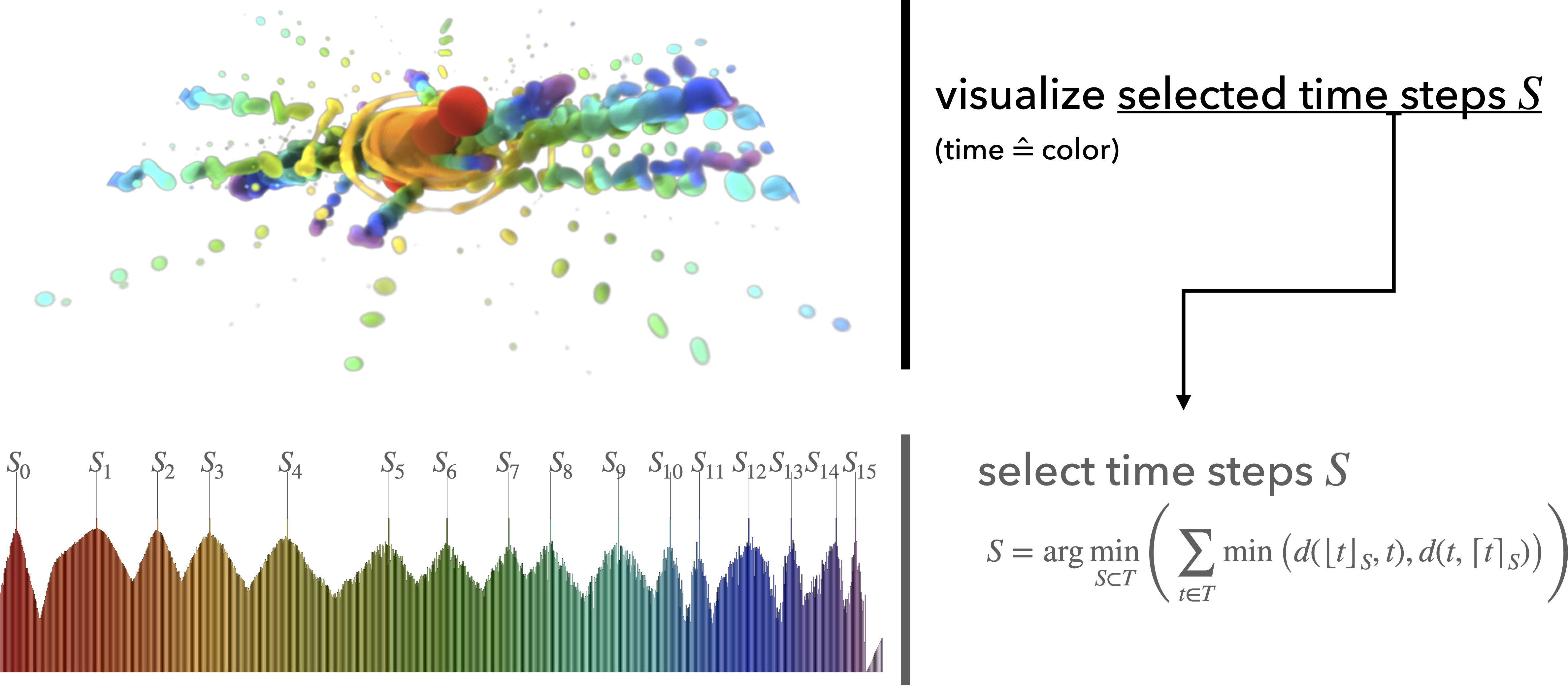
The rapid growth of data presents both opportunities and challenges for visualization. Mathematical optimization provides a robust framework to address these challenges by formulating visualization tasks as solvable problems. In this talk, we explore through concrete examples how optimization enhances visual data analysis, considering involved objectives (and their quantification), parameter spaces, and optimization approaches. We examine a range of problems, including time-dependent volume data analysis and in situ visualization scheduling, with an emphasis on grid layouts for visual clustering, anomaly detection, and exploration. The talk concludes by summarizing common themes and discussing emerging trends to enable visualization systems to handle increasingly complex and large datasets.
Bio
My research focuses on developing methods to gain insights from large scientific data, typically originating from experiments and simulations. Here, largerefers to data size, resolution, number of elements or fields, or combinations thereof. Meaningful analysis requires addressing challenges related both to presentation and to performance, and thus involves diverse—but closely interconnected—research directions. These include machine learning and optimization for visualization, high-performance computing (distributed and parallel approaches, in situ visualization), and multifield visualization. An overarching theme of my work is the automatic, data-driven configuration of visualization methods and systems.